The 2026 Midterm Elections: Key Races and Their Potential Impact on National Policy for the Next 2 Years
As the political calendar relentlessly marches forward, attention invariably turns to the next major electoral contest. For the United States, that means the 2026 Midterm Elections. Far from being mere footnotes to presidential cycles, these elections are pivotal battlegrounds that can dramatically reshape the balance of power in Washington D.C., and consequently, the direction of national policy for the subsequent two years. Understanding the stakes involved, the key races to watch, and the potential ripple effects on legislation and governance is crucial for any engaged citizen.
The midterms represent a critical referendum on the incumbent administration and the party in power. Historically, they often see a shift in congressional control, as voters express their satisfaction or dissatisfaction with the current political climate, economic conditions, and social issues. The 2026 Midterm Elections will be no exception, occurring at a juncture that promises to be fraught with significant domestic and international challenges. The outcomes will not only determine which party holds the gavels in the House and Senate but also influence judicial appointments, regulatory frameworks, and the very fabric of American society.
This comprehensive analysis will delve into the intricacies of the upcoming 2026 Midterm Elections, exploring the key races that are likely to draw national attention, the demographic and economic factors that will shape voter behavior, and the potential policy implications across various sectors. From healthcare to climate change, immigration to economic stability, the decisions made at the ballot box in 2026 will reverberate through every aspect of American life. We will also examine the historical context of midterm elections, drawing parallels and identifying potential trends that could inform our understanding of what lies ahead.
The Historical Context of Midterm Elections: A Precedent for Change
Midterm elections have a long and storied history of acting as a check on presidential power. Since the mid-19th century, the president’s party has lost seats in the House of Representatives in nearly every midterm election. While there have been exceptions, such as in 1934 during Franklin D. Roosevelt’s first term and in 2002 following the 9/11 attacks, the general trend indicates a voter tendency to balance power or express discontent with the current administration. This historical pattern is a crucial lens through which to view the 2026 Midterm Elections.
Several factors contribute to this phenomenon. Often, voter turnout is lower in midterm elections compared to presidential elections, and the electorate tends to be more engaged and ideologically motivated. Furthermore, the party out of power typically has a strong incentive to mobilize its base, framing the midterms as an opportunity to push back against the incumbent president’s agenda. The political environment leading up to the 2026 Midterm Elections will undoubtedly be shaped by the performance of the current administration, the state of the economy, and the prevailing social issues of the day.
Understanding these historical precedents allows us to anticipate certain dynamics. For instance, if the president’s approval rating is low, or if the economy is struggling, the party in power will face an uphill battle to retain or expand its congressional majorities. Conversely, a strong economy and high presidential approval could mitigate some of the traditional midterm losses. However, the American political landscape is increasingly polarized, and national issues often overshadow local concerns, making every race a potential proxy battle for broader ideological conflicts. The 2026 Midterm Elections will be a test of these enduring political forces.
Key Races to Watch in the Senate: The Battle for Control
The United States Senate is often referred to as the "graveyard of legislation," where even popular bills can stall without sufficient bipartisan support or a clear majority. The control of the Senate in the 2026 Midterm Elections will therefore be paramount in determining the legislative agenda for the latter half of the presidential term. A change in Senate control can dramatically alter the prospects for passing legislation, confirming judicial nominees, and approving executive appointments.
Several states are consistently battlegrounds in Senate races, and 2026 will likely see these familiar territories once again in the spotlight. States with retiring senators, particularly those from the opposing party of the sitting president, often become prime targets for both parties. Open seats without an incumbent provide a unique opportunity for challengers to emerge and for national parties to invest significant resources. Additionally, senators who won their previous elections by narrow margins, or those representing states that have shown a tendency to swing between parties, will face intense scrutiny and well-funded opposition.
Specific races to monitor will include those in states like Pennsylvania, Arizona, Georgia, Wisconsin, and Nevada, which have proven to be highly competitive in recent election cycles. The demographic shifts within these states, along with evolving economic conditions and local political narratives, will play a crucial role in shaping the outcomes. Furthermore, the national political environment, including the president’s approval ratings and the popularity of major policy initiatives, will undoubtedly cast a long shadow over these individual contests. The balance of power in the Senate after the 2026 Midterm Elections will dictate the pace and scope of legislative action for the subsequent two years.
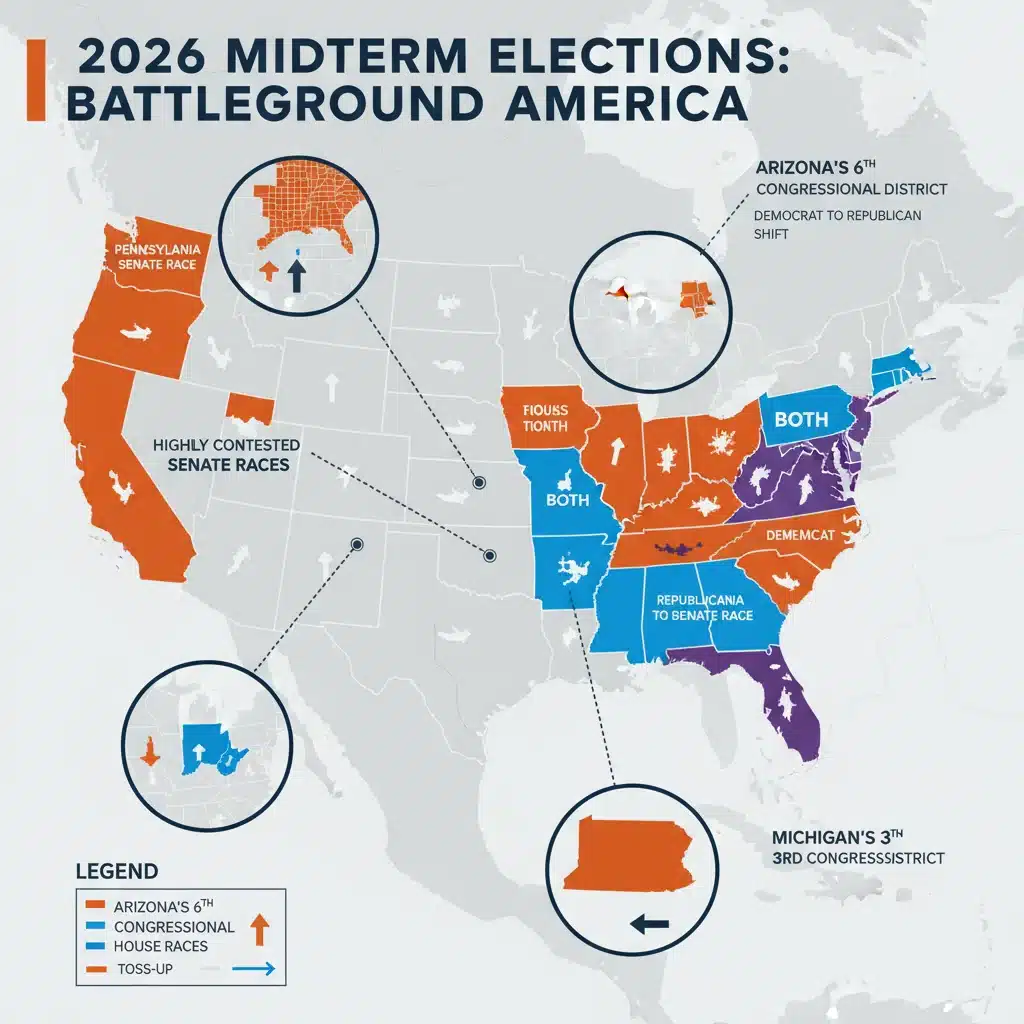
The House of Representatives: A Fight for Every Seat
While the Senate often garners significant attention due to its role in national policy and judicial appointments, the House of Representatives is equally, if not more, critical in shaping the day-to-day legislative process. All 435 seats in the House are up for grabs in the 2026 Midterm Elections, making it a vast and complex electoral landscape. The party that controls the House holds immense power, including setting the legislative agenda, chairing powerful committees, and initiating impeachment proceedings.
The battle for the House will be fought district by district, with many races decided by razor-thin margins. Gerrymandering, the practice of drawing electoral district boundaries to favor one party, will continue to be a significant factor, although some states have adopted independent redistricting commissions to mitigate its effects. Even so, the design of congressional districts can make certain seats highly competitive, while others remain relatively safe for the incumbent party. The 2026 Midterm Elections will see both parties pour resources into these marginal districts, hoping to flip seats or defend vulnerable incumbents.
Economic issues, such as inflation, employment rates, and consumer confidence, traditionally loom large in House races. Local issues, however, also play a more prominent role than in statewide Senate contests. Voters often consider their representative’s stance on community-specific concerns, infrastructure projects, and local economic development. The ability of candidates to connect with voters on these localized issues, while also aligning with national party platforms, will be crucial. The outcome of the House races in the 2026 Midterm Elections will profoundly impact the legislative environment, determining which bills are brought to a vote and which remain in committee purgatory.
Gubernatorial Races and State Legislatures: The Ripple Effect
Beyond the federal contests, the 2026 Midterm Elections will also feature numerous gubernatorial races and elections for state legislative bodies. While these races are often overshadowed by the national narrative, their outcomes have significant implications for state-level policy and can even influence federal politics through redistricting processes and the implementation of federal programs. Governors wield considerable power within their states, influencing everything from education and healthcare to environmental regulations and economic development.
The control of state legislatures is equally vital. State lawmakers are responsible for drawing congressional and state legislative district maps, a process that occurs after the decennial census. The maps drawn by state legislatures elected in 2026 could therefore influence the composition of Congress for the next decade. Furthermore, state legislatures are often testing grounds for new policies and can serve as incubators for future national political figures. A shift in power at the state level can lead to significant policy changes that directly affect citizens’ daily lives, even if they don’t make national headlines.
Key gubernatorial races in swing states will be particularly important to watch. These contests often attract national attention and significant campaign spending, as both parties vie for control of state executive branches. The results of these state-level elections will not only determine local governance but also contribute to the overall political momentum leading into the 2028 presidential election. The 2026 Midterm Elections are thus a multi-layered electoral event, with consequences extending from the local courthouse to the halls of Congress.
Demographic Shifts and Voter Behavior: Shaping the Electorate
The American electorate is constantly evolving, and demographic shifts play a significant role in shaping voter behavior and electoral outcomes. The 2026 Midterm Elections will be influenced by ongoing changes in population demographics, including age, race, ethnicity, and geographic distribution. Understanding these trends is essential for both political parties and for anticipating the potential results of key races.
The increasing diversity of the American population, particularly the growth of Hispanic and Asian American communities, is reshaping the electorate in many states. These demographic changes can alter the political leanings of traditionally red or blue states, creating new battlegrounds and challenging established political narratives. Younger voters, often more progressive on social issues, represent another crucial demographic group whose participation rates can significantly impact election results. Mobilizing these diverse groups will be a key strategy for both parties in the run-up to the 2026 Midterm Elections.
Beyond demographics, voter behavior is also influenced by a complex interplay of economic conditions, social issues, and political polarization. Issues such as inflation, healthcare access, climate change, reproductive rights, and immigration policy will undoubtedly motivate voters. The effectiveness of political campaigns in framing these issues and connecting with voters’ concerns will be paramount. Furthermore, the role of social media and information dissemination will continue to be a critical factor, shaping public opinion and potentially influencing turnout. The 2026 Midterm Elections will be a testament to the dynamic and ever-changing nature of the American electorate.
Economic Factors and Their Influence on the 2026 Midterm Elections
The economy consistently ranks as one of the top concerns for American voters, and its performance will undoubtedly cast a long shadow over the 2026 Midterm Elections. Issues such as inflation, unemployment rates, wage growth, and consumer confidence often serve as a direct barometer of public sentiment towards the incumbent administration and the party in power. A robust economy can provide a tailwind for the president’s party, while an economic downturn can create significant headwinds.
Voters often connect their personal financial well-being to the policies enacted by elected officials. If families are struggling with rising costs of living, stagnant wages, or job insecurity, they are more likely to express their dissatisfaction at the ballot box. Conversely, a period of economic prosperity can lead to greater voter satisfaction and a willingness to maintain the status quo. The challenge for political parties in 2026 will be to effectively communicate their economic platforms and convince voters that their policies offer the best path forward for individual and national prosperity.
Beyond broad economic indicators, specific industries and regions may experience unique economic challenges or opportunities that could influence local races. For example, a downturn in a key industry within a congressional district could make an incumbent particularly vulnerable. The national economic narrative, however, often dominates the discussion, shaping how voters perceive the overall direction of the country. The 2026 Midterm Elections will serve as a crucial test of how economic realities translate into political outcomes, with potentially significant ramifications for future fiscal and monetary policy.
Social and Cultural Issues at the Forefront of the 2026 Midterms
While economic concerns are often paramount, social and cultural issues also play a powerful role in motivating voters and shaping the political landscape. The 2026 Midterm Elections will undoubtedly see a continued focus on contentious issues such as reproductive rights, gun control, LGBTQ+ rights, education policy, and immigration. These issues often evoke strong emotions and can galvanize particular segments of the electorate, making them critical battlegrounds.
The judicial landscape, particularly decisions by the Supreme Court, can have a profound impact on the salience of these social issues. Rulings on matters like abortion access or affirmative action can reignite debates and drive voter engagement, especially among those who feel strongly about the protection or expansion of certain rights. Political parties will strategically position themselves on these issues, attempting to appeal to their base while also trying to win over undecided voters.
Education policy, encompassing everything from curriculum content to funding for public schools, is another area where social and cultural debates often converge. Parental rights, the role of government in education, and debates over historical narratives can become highly charged and influence local and state-level elections, which in turn can have a ripple effect on national policy discussions. The 2026 Midterm Elections will thus not only be a test of economic performance but also a reflection of the ongoing cultural debates that define contemporary American society.
The Impact on National Policy for the Next Two Years
The outcomes of the 2026 Midterm Elections will have immediate and far-reaching consequences for national policy. Regardless of which party controls Congress, the legislative agenda will be directly shaped by the new balance of power. If one party secures a trifecta (control of the presidency, House, and Senate), they will have a clearer path to enact their policy priorities. However, a divided government, which is a common outcome in midterms, often leads to gridlock, compromise, or a shift towards executive actions.
Consider the potential impact on key policy areas:
- Healthcare: Debates over the Affordable Care Act, prescription drug costs, and access to healthcare services will continue. A shift in congressional control could lead to renewed efforts to repeal or significantly amend existing healthcare legislation, or conversely, to expand access and coverage.
- Climate Change and Energy Policy: The approach to climate change, renewable energy investments, and environmental regulations will be heavily influenced. A more environmentally conscious Congress might push for aggressive climate action, while a more industry-friendly body could prioritize fossil fuel production and deregulation.
- Economic Policy: Tax reform, infrastructure spending, and federal budget priorities will be on the table. The 2026 Midterm Elections will determine whether the focus shifts towards fiscal conservatism, increased social spending, or a combination of both.
- Immigration: This perennially contentious issue will likely remain a top priority. A new Congress could push for stricter border enforcement, comprehensive immigration reform, or pathways to citizenship, depending on the party in power.
- Social Legislation: Issues such as reproductive rights, gun control, and voting rights will continue to be debated. The composition of Congress will dictate the viability of legislation addressing these sensitive topics.
Furthermore, the ability of the president to appoint judges, ambassadors, and cabinet secretaries is directly tied to Senate confirmation. A change in Senate control could significantly alter the president’s ability to shape the federal judiciary and executive branch, thereby influencing policy implementation for years to come. The 2026 Midterm Elections are not just about who wins seats; they are about the fundamental direction of the country.
Campaign Strategies and the Role of Media in the 2026 Midterms
As with all modern elections, campaign strategies and the role of traditional and social media will be critical in the 2026 Midterm Elections. Political parties and individual candidates will employ sophisticated data analytics to identify target voters, tailor their messages, and mobilize their bases. The use of micro-targeting, digital advertising, and grassroots organizing will be more advanced than ever before.
The media landscape, increasingly fragmented and polarized, will play a significant role in shaping public opinion. Traditional news outlets, cable news channels, and a myriad of online platforms will provide a constant stream of information and commentary. The challenge for voters will be to discern credible information from misinformation and disinformation, which is likely to be a persistent feature of the electoral cycle. Social media platforms, in particular, will continue to be powerful tools for both campaigning and for the rapid dissemination of political narratives, both accurate and misleading.
Fundraising will also be a crucial component of campaign success. Midterm elections are expensive, and candidates will rely heavily on individual donors, political action committees (PACs), and super PACs to fund their advertising, outreach, and ground operations. The ability to raise and effectively deploy financial resources can often be the difference between victory and defeat, particularly in highly contested races. The 2026 Midterm Elections will be a masterclass in modern political campaigning, with both parties striving to perfect their strategies to win over a divided electorate.
Conclusion: The Stakes of the 2026 Midterm Elections
The 2026 Midterm Elections are far more than a routine electoral event; they are a critical juncture that will significantly influence the trajectory of American national policy for the subsequent two years and potentially beyond. From the fierce battles for control of the Senate and House of Representatives to the equally important gubernatorial and state legislative contests, every race will contribute to the broader political narrative and the distribution of power.
The confluence of historical trends, demographic shifts, economic anxieties, and deeply held social and cultural beliefs will create a complex and dynamic electoral environment. Voters will weigh the performance of the incumbent administration, the promises of challengers, and the potential impact of legislative changes on their daily lives. The outcomes will dictate the feasibility of major policy initiatives across healthcare, climate, economy, and social justice, shaping the lives of millions of Americans.
For citizens, understanding these dynamics and actively participating in the electoral process is more crucial than ever. The 2026 Midterm Elections will serve as a powerful reminder that democracy is an ongoing endeavor, requiring constant engagement and informed decision-making. The choices made at the ballot box will reverberate throughout the nation, setting the course for the next chapter of American governance and policy. Prepare to watch closely, as the future of national policy hangs in the balance.