2025 K-Drama Market: US Viewership Reshapes Production Budgets
The landscape of global entertainment is in constant flux, but few phenomena have captured worldwide attention quite like the meteoric rise of K-Dramas. What began as a niche interest has blossomed into a global cultural powerhouse, and nowhere is this more evident than in the United States. The year 2025 is poised to mark a pivotal moment, as US viewership trends are not just influencing content consumption but actively redefining K-Drama production budgets, with an estimated 15% increase on the horizon. This significant shift in the K-Drama market is a testament to the genre’s universal appeal and the growing economic power of its international fanbase.
For years, K-Dramas were primarily consumed by Asian diaspora communities or dedicated fans seeking unique storytelling. However, the advent of global streaming platforms like Netflix, Viki, and Hulu has democratized access, exposing these captivating narratives to a broad American audience. This accessibility, coupled with compelling storylines, high production values, and charismatic actors, has fueled an unprecedented surge in popularity. This article delves deep into the mechanisms behind this K-Drama market shift, exploring how US viewing habits are directly impacting the financial strategies and creative decisions of Korean production houses.
Understanding the intricacies of this evolution requires a look beyond mere viewership numbers. It involves analyzing demographic shifts, content preferences, the role of social media, and the strategic investments made by streaming giants. The ripple effect of American demand is not just about more money; it’s about a fundamental reorientation of what K-Dramas are, who they are made for, and how they are brought to life. The 2025 K-Drama market is shaping up to be a globalized, highly competitive, and richly funded ecosystem, largely thanks to the American viewer.
The Ascendance of K-Dramas in the US: A Cultural Phenomenon
The journey of K-Dramas from cult favorites to mainstream sensations in the US has been nothing short of remarkable. What factors have contributed to this cultural phenomenon, and how exactly has it instigated a K-Drama market shift? Initially, the appeal was often attributed to the novelty of Korean culture, the refreshing narratives that often diverged from typical Western fare, and the strong emphasis on character development and emotional depth. Unlike some American productions that prioritize spectacle, K-Dramas often focus on intricate plotlines, nuanced relationships, and a unique blend of genres, from romantic comedies to gritty thrillers and historical epics.
Streaming platforms have been the primary catalyst. Netflix, in particular, recognized the immense potential of K-Dramas early on, investing heavily in licensing and original productions. This strategic move made K-Dramas readily available to millions of American households, overcoming previous barriers of access and language. The ease of access, coupled with high-quality subtitles and dubbing options, opened the floodgates for new viewers. Data from various streaming services consistently shows K-Drama titles ranking high in viewership charts in the US, often alongside popular American and European content.
Beyond accessibility, the quality of storytelling plays a crucial role. K-Dramas often tackle universal themes of love, loss, ambition, family, and societal pressures, but with a distinct cultural lens. This blend of familiarity and exoticism creates a compelling viewing experience. The production values have also steadily climbed, with stunning cinematography, elaborate sets, and intricate costume designs becoming hallmarks of the genre. This commitment to aesthetic excellence makes K-Dramas visually appealing and contributes to their premium feel, further attracting discerning American audiences.
Furthermore, social media has amplified the K-Drama craze. Platforms like TikTok, Twitter, and Instagram buzz with fan discussions, memes, and recommendations, creating a vibrant online community. This organic word-of-mouth marketing is incredibly powerful, drawing in new viewers who are curious about the shows their friends or favorite influencers are raving about. The ability for fans to connect globally and share their passion has solidified K-Dramas’ place in the American cultural zeitgeist, directly impacting the K-Drama market shift and its financial implications.
Analyzing US Viewership Trends: What Americans Want
To understand the estimated 15% increase in K-Drama production budgets by 2025, it’s crucial to dissect what American viewers are actually watching and enjoying. The preferences of the US audience are not monolithic, but certain trends emerge from viewership data and fan engagement. Initially, romantic comedies and fantasy dramas were the gateways for many American viewers. Shows like ‘Crash Landing on You,’ ‘Goblin,’ and ‘What’s Wrong with Secretary Kim’ captivated audiences with their charming leads, whimsical plots, and heartfelt narratives.
However, as the American audience diversified and became more accustomed to the genre, their tastes broadened. Gritty thrillers and psychological dramas, such as ‘Squid Game,’ ‘Vincenzo,’ and ‘Kingdom,’ have achieved massive success, demonstrating a demand for more complex and darker narratives. ‘Squid Game,’ in particular, broke global streaming records, proving that K-Dramas could transcend language and cultural barriers to become universal blockbusters. This success signaled to production companies that investing in diverse genres with high stakes and intricate plots could yield significant returns in the US market.
Period dramas, or ‘sageuk,’ have also found a dedicated following, offering a glimpse into Korean history and culture through epic storytelling and stunning visuals. Shows like ‘Mr. Sunshine’ and ‘Kingdom’ combine historical settings with modern production techniques, appealing to viewers who appreciate historical epics. The demand for high-concept sci-fi and fantasy, often with a unique Korean twist, is also on the rise, pushing creative boundaries and requiring substantial investment in special effects and world-building.
Another critical trend is the appreciation for strong female leads and narratives that challenge traditional gender roles. Many K-Dramas feature resilient, intelligent, and independent female characters, resonating with a progressive American audience. Furthermore, the emphasis on character development and emotional intelligence, often explored through intricate relationships, continues to be a draw. These evolving preferences are directly informing production decisions, leading to a more varied and ambitious slate of K-Dramas. This insight into American preferences is a key driver of the K-Drama market shift.

The Direct Impact on Production Budgets: A 15% Increase by 2025
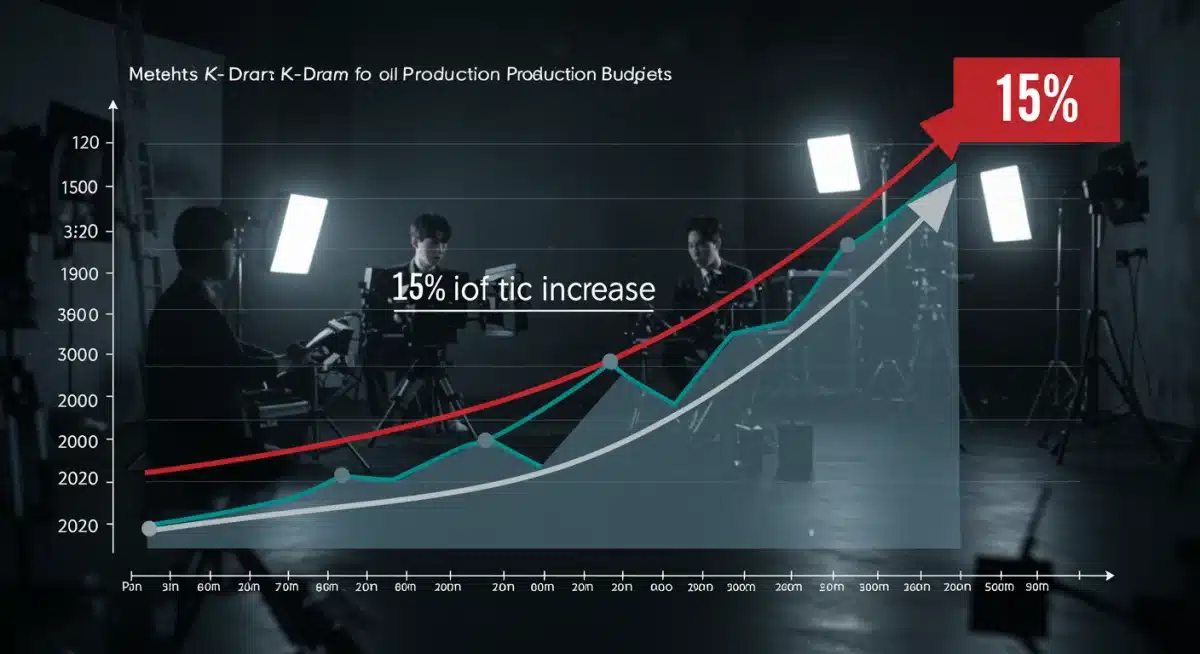
The burgeoning US viewership for K-Dramas is not just a statistical anomaly; it’s a powerful economic force that is directly translating into increased production budgets. The estimated 15% increase by 2025 is a conservative projection, reflecting the growing confidence of investors and production studios in the profitability of K-Dramas tailored for a global audience, particularly the US market. This K-Drama market shift is primarily driven by several interconnected factors:
Increased Investment from Global Streaming Platforms
Platforms like Netflix, Disney+, and Apple TV+ are locked in a fierce battle for subscribers. Original, high-quality content is their most potent weapon. Recognizing the proven success of K-Dramas in attracting and retaining subscribers, these platforms are pouring unprecedented amounts of money into Korean productions. Netflix, for instance, has committed billions to Korean content, funding a diverse range of projects from ambitious blockbusters to niche indie dramas. This direct investment significantly inflates individual drama budgets, allowing for grander scales, better special effects, and more renowned talent.
Higher Talent Fees and Production Costs
As K-Dramas gain international recognition, so do their stars and production teams. Top-tier Korean actors, writers, and directors are now global celebrities, commanding higher fees for their involvement. This increased demand for premium talent directly impacts production budgets. Furthermore, the desire to maintain and elevate the already high production values – intricate sets, elaborate costumes, sophisticated cinematography, and extensive post-production – necessitates larger financial outlays. The K-Drama market shift means that quality is no longer just a domestic concern; it’s a global benchmark.
Expansion into New Genres and Larger Scales
The success of diverse genres in the US market encourages Korean production houses to experiment with more ambitious and costly projects. Developing large-scale fantasy, sci-fi, or historical epics requires significant investment in CGI, special effects, and location shooting. A K-Drama that might have once been produced on a modest budget for a domestic audience is now conceived with international appeal and production values in mind, leading to a natural escalation in costs. This strategic expansion is a critical component of the K-Drama market shift.
Marketing and Localization Expenses
Reaching a global audience, especially in the US, involves substantial marketing efforts. This includes extensive promotional campaigns, press junkets, and collaborations with influencers. Additionally, high-quality localization (subtitling, dubbing, and cultural adaptations) is crucial for American viewers, and these processes add to the overall production budget. The investment in making K-Dramas accessible and appealing to non-Korean speaking audiences is a necessary expenditure that directly contributes to the rising financial commitments.
The estimated 15% increase is not just an arbitrary figure; it reflects a strategic response by the industry to capitalize on and further cultivate the lucrative US market. This K-Drama market shift signifies a new era where Korean content is no longer just exported but co-created and co-funded with a global audience in mind.
Strategic Responses from Korean Production Houses
Korean production houses are keenly aware of this K-Drama market shift and are strategically adapting to meet the demands and capitalize on the opportunities presented by US viewership. Their responses are multifaceted, encompassing creative development, talent management, and business partnerships.
Focus on Global Appeal in Script Development
While maintaining their unique Korean identity, production companies are increasingly greenlighting scripts with universal themes and narratives that can resonate across cultures. This doesn’t mean sacrificing Korean authenticity but rather finding common ground in human experiences. Writers are encouraged to develop stories that, while rooted in Korean context, possess a broader appeal, avoiding overly niche cultural references that might alienate international viewers. The K-Drama market shift demands a balance between local flavor and global accessibility.
Investing in High-End Production Values and Technology
With increased budgets, studios are investing heavily in state-of-the-art production technology, including advanced special effects, cinematic cameras, and sophisticated post-production facilities. This commitment to visual excellence ensures that K-Dramas can compete with Hollywood productions in terms of aesthetic quality. The goal is to deliver a premium viewing experience that justifies the increased investment and satisfies the expectations of a discerning global audience.
Nurturing Global Talent and Collaborations
The K-Drama market shift also extends to talent. Korean production houses are not only nurturing their domestic stars but also exploring collaborations with international actors, writers, and directors. This cross-cultural exchange can bring fresh perspectives and further broaden the appeal of K-Dramas. Agencies are also working to build the international profiles of Korean actors, recognizing their potential as global entertainment icons.
Diversification of Content Portfolios
To cater to the varied tastes of American viewers, production houses are diversifying their content portfolios. This means producing a wider range of genres, from lighthearted romantic comedies to dark thrillers, historical epics, and experimental sci-fi. The aim is to capture different segments of the US audience and maintain their interest with a constant flow of fresh and engaging content. This strategic diversification is a direct result of the K-Drama market shift.
Strengthening Partnerships with Global Streaming Platforms
Korean production companies are forging deeper and more strategic partnerships with global streaming giants. These collaborations often involve co-production deals, where streaming platforms provide significant funding in exchange for exclusive global distribution rights. These partnerships are crucial for securing the financial resources needed for larger budgets and for ensuring broad international reach.
Challenges and Opportunities in the Evolving K-Drama Market
While the K-Drama market shift driven by US viewership presents immense opportunities, it also comes with its own set of challenges. Navigating these will be crucial for the sustained growth and success of the industry.
Maintaining Cultural Authenticity vs. Global Appeal
One of the primary challenges is finding the delicate balance between maintaining the unique cultural authenticity that makes K-Dramas so appealing and adapting to global tastes. Over-localization or attempts to overly Westernize content could dilute the very essence that attracts international viewers. The K-Drama market shift requires a nuanced approach where cultural distinctiveness is celebrated while ensuring universal relatability.
Increased Competition and Market Saturation
As more money pours into K-Drama production, competition intensifies. Both within Korea and from other international content creators, the fight for viewership and talent will become fiercer. There’s also a risk of market saturation if the volume of content outpaces genuine audience demand, potentially leading to a decrease in overall quality or viewer fatigue. The estimated 15% increase in budgets needs to translate into genuinely innovative and high-quality content to stand out.
Talent Strain and Burnout
The increased demand for K-Dramas puts significant strain on actors, writers, and production crews. The notoriously demanding production schedules, sometimes referred to as ‘live-shoot’ systems, could lead to burnout and impact the well-being of those involved. Sustainable production practices will be vital to ensure the long-term health of the industry amidst the K-Drama market shift.
Opportunities for Innovation and Creative Experimentation
Despite the challenges, the K-Drama market shift offers unparalleled opportunities for innovation. Increased budgets and global platforms allow for greater creative freedom and the ability to experiment with unconventional narratives, complex themes, and cutting-edge visual effects. This could lead to a new golden age for K-Dramas, pushing artistic boundaries and captivating audiences with even more diverse and sophisticated storytelling.
Economic Growth and Soft Power Projection
The economic impact of the K-Drama market shift extends beyond the entertainment industry. Increased production budgets and global viewership contribute significantly to South Korea’s economy, boosting tourism, fashion, music, and other related industries. Furthermore, K-Dramas serve as a powerful tool for soft power projection, enhancing South Korea’s global image and cultural influence, especially in the US.
The Future of K-Dramas: Beyond 2025
Looking beyond 2025, the K-Drama market shows no signs of slowing down its transformational trajectory. The significant K-Drama market shift initiated by US viewership is likely to solidify and expand, creating a truly globalized industry. We can anticipate several key developments:
Further Integration with Global Production Models
Expect to see more co-productions between Korean and Western studios, leading to hybrid content that blends the best of both worlds. This could involve international cast members, bilingual scripts, and storylines that explicitly cater to a diverse global audience from conception. This integration will further normalize K-Dramas as a staple in the global entertainment diet.
Technological Advancements and Immersive Experiences
With increased budgets, investment in cutting-edge technology will continue to grow. This might include more sophisticated virtual production techniques, advanced CGI, and even ventures into interactive storytelling or virtual reality experiences related to K-Drama universes. The aim will be to create even more immersive and engaging content for viewers worldwide.
Niche Content Development for Specific US Demographics
As data on US viewership becomes more granular, production houses may start developing niche K-Dramas targeting specific American demographics or subcultures. This could lead to a highly diversified content offering that caters to a wide spectrum of tastes, moving beyond broad appeal to specific, engaged communities within the US.
Increased Role of AI in Production and Personalization
Artificial intelligence could play a larger role in analyzing viewership data, predicting trends, and even assisting in script development or content personalization. While human creativity will remain paramount, AI could optimize production processes and help tailor content more precisely to audience preferences, further refining the K-Drama market shift.
Sustainability and Ethical Production Practices
As the industry grows, there will be an increased focus on sustainable and ethical production practices. This includes addressing issues of environmental impact, fair labor practices, and talent welfare. A more mature and globally recognized industry will be expected to adhere to higher standards of corporate social responsibility.
Conclusion: A New Era for K-Dramas
The K-Drama market shift, fueled significantly by US viewership trends, represents a pivotal moment in the history of global entertainment. The estimated 15% increase in production budgets by 2025 is not merely a financial statistic; it is a powerful indicator of the genre’s enduring appeal, its growing economic influence, and its capacity to transcend cultural boundaries. American audiences have embraced K-Dramas with an enthusiasm that has fundamentally altered the industry’s trajectory, pushing it towards greater ambition, innovation, and global collaboration.
As K-Dramas continue to evolve, they will undoubtedly face new challenges, but the opportunities for growth, creative experimentation, and cultural exchange are immense. The ongoing investment, driven by the insatiable demand from the US and other global markets, ensures that K-Dramas will remain at the forefront of popular culture for years to come. The future of K-Dramas is bright, diverse, and increasingly global, with the American viewer playing an indispensable role in shaping its exciting new chapter. This K-Drama market shift is not just a trend; it’s a new reality.